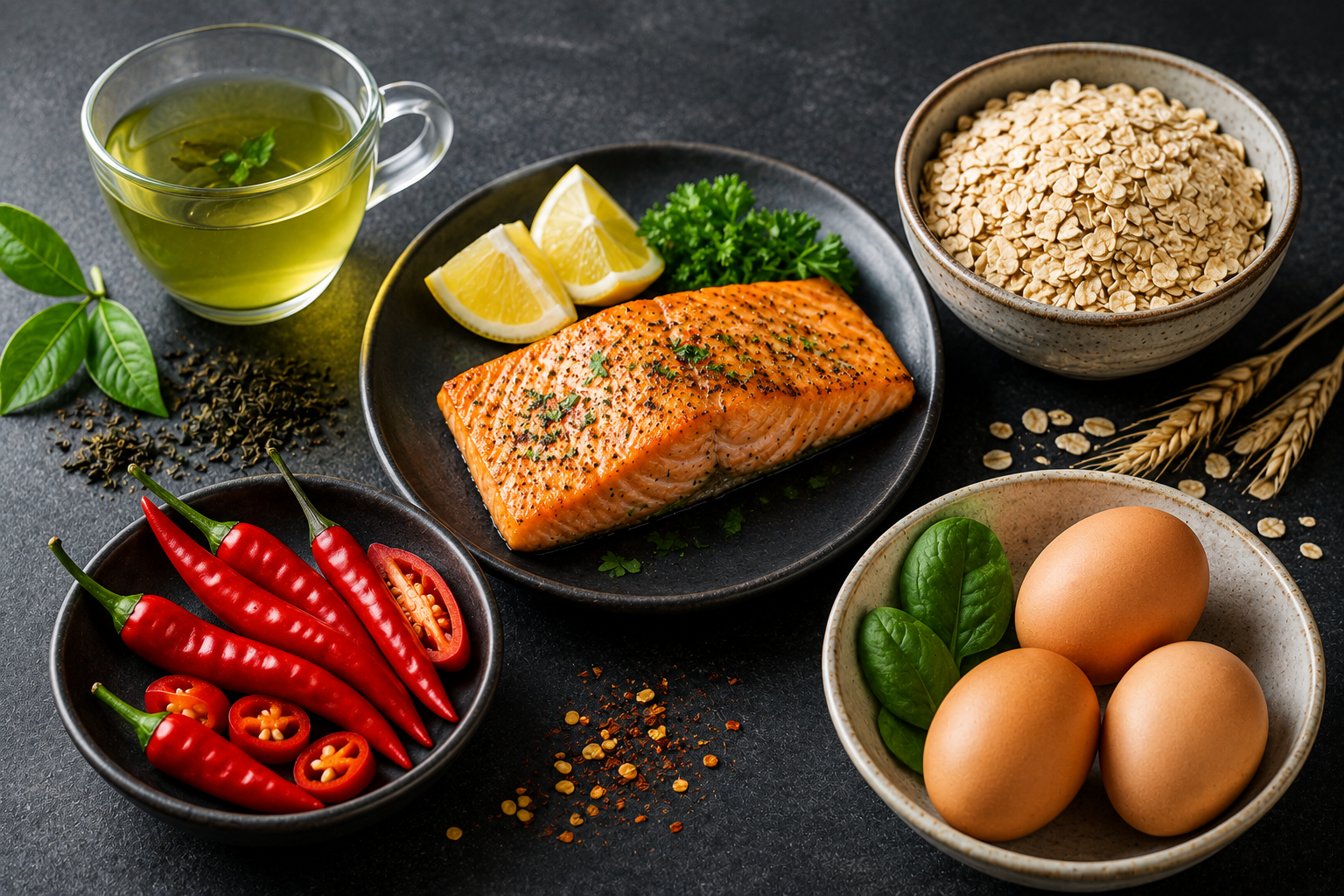
Most people trying to lose fat focus almost entirely on what they cut out of their diet. However, what you add in matters just as much as what you remove. Certain foods require more energy to digest, influence hormones involved in fat storage, and support the metabolic processes that keep your body burning fuel efficiently throughout the day.
No single food will transform your body overnight. That is not how metabolism works. However, consistently including the right foods alongside regular strength training creates a genuine edge for adults who want to lose fat, maintain muscle, and feel more energetic. At No Limit Personal Training in Placentia, we help adults in Orange, Anaheim Hills, Villa Park, and Yorba Linda pair smart nutrition with structured training to get real results. These five foods are a great place to start.
What Is Metabolism and Why Does It Matter
Before diving into the foods, it helps to understand what metabolism actually is so you know why these foods make a difference.
Your metabolism is the total number of calories your body burns each day through three main processes. Your resting metabolic rate, the calories you burn just to keep your organs functioning. The thermic effect of food, the energy your body uses to digest and process what you eat. And your physical activity, the calories you burn through movement and exercise.
Research from Harvard Health confirms that certain foods can influence diet-induced thermogenesis, meaning they increase the energy your body uses during digestion. Others influence hormones like leptin and insulin that directly affect how your body stores or burns fat. Understanding these mechanisms helps explain why the foods below make a real difference when eaten consistently as part of a balanced diet.
1. Fatty Fish
Fatty fish including salmon, tuna, mackerel, herring, and sardines are rich in omega-3 fatty acids and high-quality protein. Both nutrients contribute to a metabolism-boosting effect in different ways.
Protein has a significantly higher thermic effect than carbohydrates or fat, meaning your body burns more calories digesting it. Research consistently shows that protein-rich meals increase metabolic rate by 15 to 30 percent for several hours after eating, compared to just 5 to 10 percent for carbohydrates and 0 to 3 percent for fat.
Omega-3 fatty acids support healthy leptin levels, the hormone that signals fullness and helps regulate how efficiently your body burns stored fat. Research also suggests omega-3s may raise resting metabolic rate, contributing to fat loss over time.
How to Eat It
- Aim for at least two servings of fatty fish per week as recommended by the American Heart Association
- Grill, bake, or steam rather than frying to keep the meal lean
- Add salmon to salads, grain bowls, or eat alongside roasted vegetables
2. Green Tea
Green tea contains two active compounds that work together to support metabolism. Caffeine, which temporarily raises metabolic rate by stimulating the nervous system. And catechins, particularly a compound called EGCG, which have been shown to enhance fat oxidation during exercise and at rest.
Research published in the American Journal of Clinical Nutrition found that green tea extract increased fat burning by 17 percent during moderate intensity exercise. A separate study showed that people who combined green tea consumption with regular exercise burned more calories than those who exercised without it.
Green tea achieves this without the jitters or energy crash that often follows high-dose caffeine supplements. It is one of the most evidence-backed natural compounds for supporting fat metabolism available.
How to Use It
- Drink two to three cups of green tea daily for consistent benefit
- Unsweetened is always best as added sugar cancels out the metabolic benefit
- Drink one cup before training to support fat burning during your session
3. Rolled Oats and Whole Grains
Unlike refined grains that are quickly digested and cause blood sugar spikes, whole grains like rolled oats, brown rice, and quinoa are rich in fiber and require significantly more energy to break down. This higher thermic effect means your body burns more calories processing them compared to their refined counterparts.
Oats in particular contain a soluble fiber called beta-glucan which slows digestion, stabilizes blood sugar, and keeps you feeling full for longer. Research from Harvard Health confirms that fiber-rich unrefined carbohydrates can increase energy expenditure because of the effort required to digest them.
Additionally, stable blood sugar from oats means fewer energy crashes and cravings throughout the day, which supports better food choices and more consistent energy for training.
How to Eat Them
- Start the day with a bowl of rolled oats topped with protein such as Greek yogurt or eggs on the side
- Swap white rice for brown rice or quinoa in main meals
- Choose whole grain bread and pasta over refined versions where possible
4. Hot Peppers
Jalapeños, habaneros, cayenne, and chili peppers all contain a compound called capsaicin which gives them their heat. Capsaicin stimulates the body to produce heat through a process called thermogenesis, temporarily raising your core temperature and increasing the number of calories you burn.
Research from Ochsner Health shows that capsaicin can temporarily increase metabolism by 15 to 20 percent by stimulating body heat. Separately, adding spice to a meal has been shown to increase metabolic rate for up to three hours after eating.
Beyond the thermogenic effect, capsaicin also helps your brain release endorphins which improves mood and may reduce stress-related eating. It is one of the most well-researched natural thermogenic compounds available and far safer than most thermogenic supplements on the market.
How to Use It
- Add fresh jalapeño or cayenne pepper to eggs, stir fries, and soups
- Use hot sauce on lean protein dishes to add flavor and a metabolic boost
- Even small amounts have an effect so start with what is comfortable and build from there
5. Lean Protein Foods
Protein is the single most powerful macronutrient for supporting metabolism. Harvard Health research confirms that protein has a thermic effect of 20 to 30 percent, meaning your body burns 20 to 30 calories for every 100 calories of protein you consume, just through digestion. No other macronutrient comes close to this level of metabolic activity.
Beyond the thermic effect, adequate protein intake preserves and builds lean muscle mass. Muscle tissue burns significantly more calories at rest than fat tissue. As a result, the more lean muscle you carry, the higher your resting metabolic rate becomes. This is why strength training combined with high protein intake is the most powerful long-term strategy for supporting a fast metabolism.
The best protein sources include chicken breast, turkey, eggs, Greek yogurt, cottage cheese, salmon, lean beef, and legumes like black beans and lentils.
How to Eat It
- Aim for 25 to 35 grams of protein per meal spread consistently across the day
- Include a protein source at every meal rather than loading it all into dinner
- Greek yogurt, cottage cheese, and eggs are fast high-protein options for busy mornings
Building simple nutrition habits for busy adults around these foods consistently is what produces lasting metabolic and fat loss results over time.
The Bigger Picture
These five foods work best as part of a complete approach to nutrition and training. Including them consistently is genuinely useful. However, relying on any single food or ingredient to fix a slow metabolism misses the real driver of metabolic health.
The most powerful thing you can do for your metabolism is build and maintain lean muscle through regular strength training. Research consistently shows that strength training to boost metabolism raises your resting metabolic rate far more significantly than any food or supplement ever could because muscle tissue burns calories continuously, not just during exercise.
For adults who want to go beyond food alone and get targeted guidance on what to eat and how to train for their specific goals, nutrition coaching options at NLPT pair personalized nutrition with structured strength programming for complete results. We also carry quality, third-party tested supplements at NLPT for adults who want additional support alongside their nutrition plan.
Who This Is For
This post is for adults who want to eat smarter to support their training results and fat loss goals. It is for people who want practical, research-backed food choices rather than another restrictive diet plan.
It may be for you if you:
- Want to support fat loss through smarter food choices alongside your training
- Feel like your metabolism has slowed and want to understand what actually helps
- Are looking for simple additions to your diet that make a real difference
- Want nutrition guidance that connects to your strength training goals
- Live near Placentia, Orange, Anaheim Hills, Villa Park, or surrounding communities
What to Do Next
Adding these five foods to your regular diet is a simple and effective starting point for supporting your metabolism and fat loss goals. Start with one or two changes this week. Swap refined grains for oats. Add fatty fish twice a week. Include protein at every meal. These small consistent shifts compound into meaningful results over time.
Call us at (714) 909-1203 or email info@nolimitpt.com if you want help building a nutrition and training plan around your specific goals. We are at 980 S Via Rodeo, Placentia CA.
Eat smart. Train hard. The results follow.
Frequently Asked Questions
What foods boost metabolism the most?
Protein-rich foods have the highest thermic effect of any macronutrient, meaning your body burns the most calories digesting them. Fatty fish, lean meats, eggs, and Greek yogurt are among the most effective metabolism-supporting foods. Green tea, hot peppers, and whole grains also have research-backed metabolic benefits.
Do metabolism-boosting foods actually work?
Yes, but with realistic expectations. No single food dramatically changes your metabolic rate on its own. However, consistently eating foods with a higher thermic effect, like protein and fiber-rich whole grains, combined with regular strength training produces genuine and measurable improvements in metabolic rate over time.
How does green tea boost metabolism?
Green tea contains both caffeine and a compound called EGCG. Together these compounds stimulate fat oxidation and temporarily raise metabolic rate. Research shows green tea can increase fat burning by up to 17 percent during exercise. Drinking two to three unsweetened cups daily provides consistent benefit.
Does eating more protein really speed up metabolism?
Yes. Protein has a thermic effect of 20 to 30 percent, meaning your body burns significantly more calories digesting protein than it does digesting carbohydrates or fat. Additionally, protein supports muscle growth and maintenance, and muscle tissue burns more calories at rest than fat tissue, raising your resting metabolic rate long term.
What is the most effective way to boost metabolism long term?
Building lean muscle through consistent strength training is the most powerful long-term metabolic strategy available. Muscle tissue burns significantly more calories at rest than fat tissue. Combined with adequate protein intake and the metabolism-supporting foods listed above, strength training produces lasting improvements in metabolic rate that no supplement or food alone can replicate.