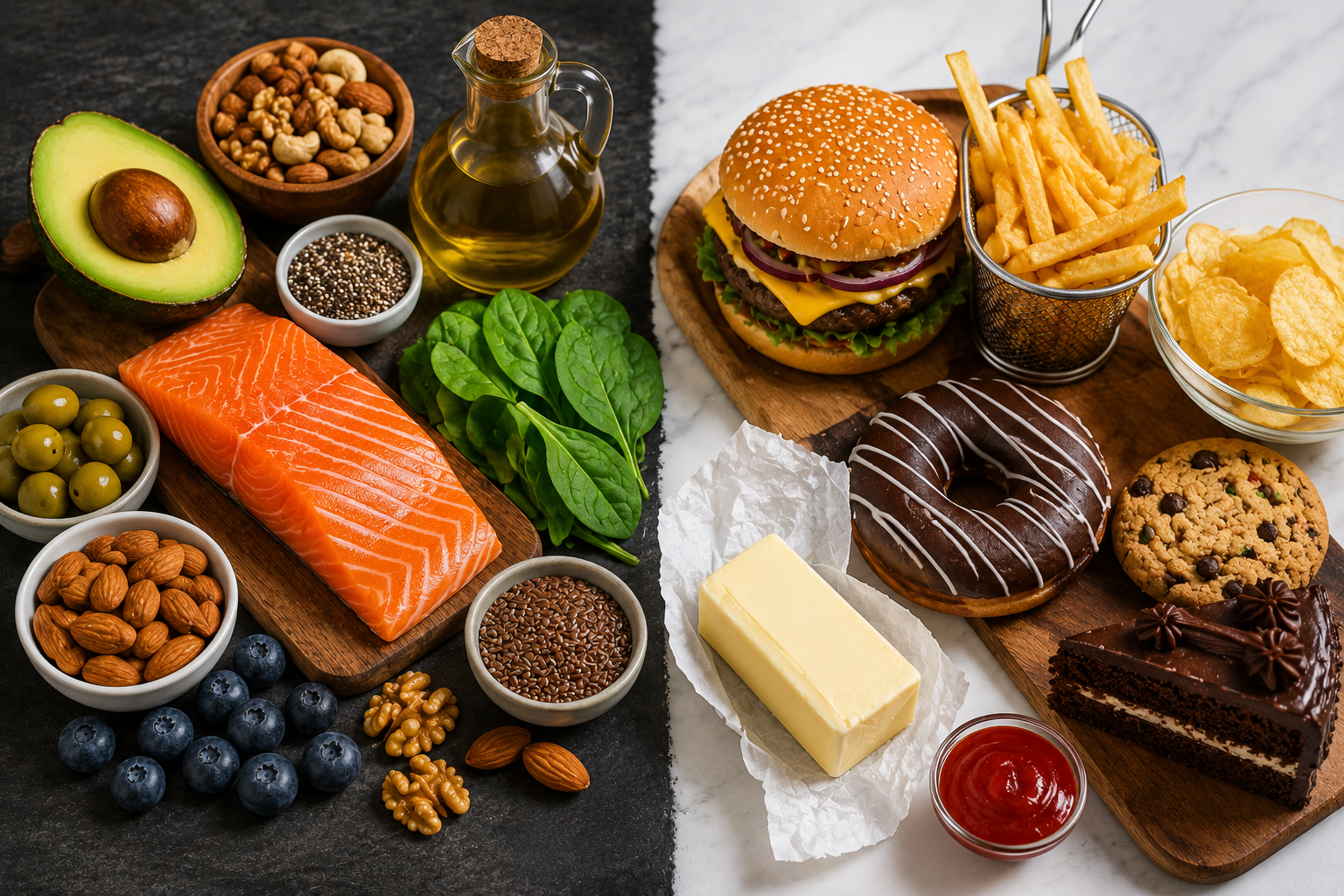
Fat has been blamed for weight gain, heart disease, and poor health for decades. As a result, low-fat products took over grocery store shelves and millions of people cut fat from their diets entirely. However, the research tells a more nuanced story and most of what people were told about fat was either incomplete or simply wrong.
Your body needs fat to function. Fat supports hormone production, brain function, vitamin absorption, and cell membrane health. The question is never whether to eat fat. It is which fats to eat, how much, and where they come from.
At No Limit Personal Training in Placentia, we help adults in Orange County build nutrition habits that are practical, evidence-based, and sustainable. Understanding the difference between good fats and bad fats is one of the most useful things you can do for your health and your training. Here is the honest breakdown.
Why Fat Is Not the Enemy
For a long time, dietary fat was treated as the primary driver of body fat and heart disease. However, decades of research have since shown that the picture is far more complex.
Harvard Health puts it clearly. Your body needs fat from food as a major source of energy. Fat helps absorb vitamins and minerals, builds cell membranes, and is essential for blood clotting, muscle movement, and managing inflammation. Cutting fat from your diet entirely does not make you healthier. In fact, research shows that when people replaced dietary fat with refined carbohydrates, their health outcomes did not improve and in many cases got worse.
The real issue is not fat itself. It is the type of fat, the amount, and the overall quality of your diet around it.
The Four Types of Dietary Fat
There are four main types of dietary fat. Understanding what each one does helps you make smarter choices without overthinking every meal.
Monounsaturated Fats
Monounsaturated fats are the most consistently well-researched healthy fats available. They are liquid at room temperature and come primarily from plant sources.
Research shows monounsaturated fats reduce LDL cholesterol, the harmful kind, while supporting HDL cholesterol, the protective kind. They also improve insulin sensitivity, which directly affects how your body regulates blood sugar and stores fat.
- Olive oil and avocado oil
- Avocados
- Almonds, cashews, peanuts, and hazelnuts
- Olives
Polyunsaturated Fats
Polyunsaturated fats include omega-3 and omega-6 fatty acids, both of which are essential because your body cannot produce them on its own. They must come from food.
Omega-3 fatty acids in particular have strong research support for reducing inflammation, supporting heart health, and helping regulate fat metabolism. Banner Health confirms that unsaturated fats including omega-3s improve insulin sensitivity and help regulate blood sugar, both of which matter significantly for adults focused on body composition.
- Fatty fish including salmon, tuna, mackerel, herring, and sardines
- Walnuts and flaxseeds
- Chia seeds and hemp seeds
- Sunflower and safflower oils
Saturated Fats
Saturated fats are solid at room temperature and come primarily from animal products. They have been labeled the villain of dietary fat for decades. However, the current research is more nuanced than the old messaging suggested.
The Dietary Guidelines for Americans recommend limiting saturated fat to less than 10 percent of daily calories. The American Heart Association recommends less than 6 percent for anyone with elevated cholesterol. However, a 2024 Cleveland Clinic review notes that not all saturated fat sources carry the same risk. Whole-fat dairy, dark chocolate, and unprocessed meats do not necessarily raise heart disease risk the way heavily processed saturated fat sources do.
The practical guidance is to moderate rather than eliminate. Prioritize unsaturated fat sources most of the time and limit heavily processed sources of saturated fat like packaged baked goods, fried foods, and fast food.
- Found in butter, cheese, whole milk, red meat, and coconut oil
- Limit to less than 10 percent of daily calories
- Whole food sources carry less risk than processed sources
Trans Fats
Trans fats are the only category where the science is completely clear. Harvard Health states there are no known health benefits of trans fats and no safe level of consumption. As a result, the FDA officially banned industrially produced trans fats in the United States.
Trans fats raise LDL cholesterol and simultaneously lower HDL cholesterol, the exact opposite of what you want. According to Banner Health, this dual effect significantly increases the risk of heart disease, stroke, and type 2 diabetes.
Although the ban removed most trans fats from the food supply, they can still appear in small amounts in some packaged and fried foods. Always check labels for the words hydrogenated or partially hydrogenated oils, which indicate trans fat presence.
- Found in some packaged snacks, fried foods, and margarine
- Always check labels for hydrogenated or partially hydrogenated oils
- Avoid completely wherever possible
Good Fats and Fat Loss
One of the most common misconceptions about dietary fat is that eating fat makes you fat. However, research consistently shows this is not accurate when fat comes from quality sources and fits within appropriate calorie intake.
In fact, healthy fats from sources like avocado, olive oil, nuts, and fatty fish support fat loss by improving satiety, stabilizing blood sugar, and reducing the cravings that lead to overeating. A 2022 review found that unsaturated fats are less likely to be deposited as visceral fat compared to saturated fats, meaning better fat quality produces better body composition outcomes over time.
Understanding foods that support fat loss helps connect the dots between what you eat and how your body responds during training. And if you have wondered whether supplements can compensate for poor nutrition.
Practical Tips for Eating the Right Fats
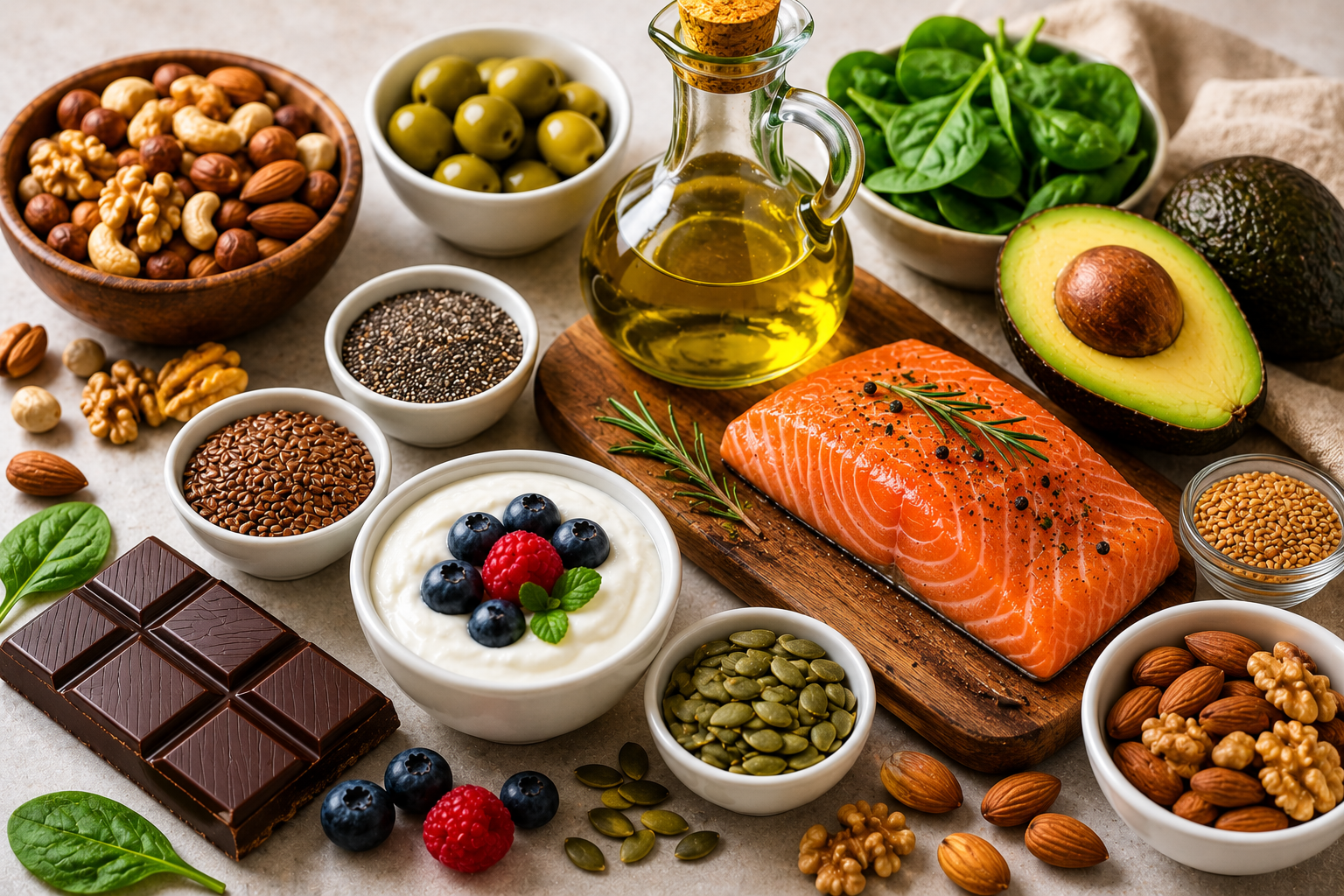
You do not need to track every gram of fat to eat well. These simple habits make the biggest difference for most adults.
Focus on Whole Food Sources
The source of fat matters as much as the type. Whole foods like avocados, nuts, seeds, olive oil, and fatty fish deliver healthy fats alongside fiber, vitamins, and minerals. Processed foods that contain fat typically strip out the benefits and add sugar, sodium, and refined flour alongside it.
Use Olive Oil as Your Primary Cooking Fat
Extra virgin olive oil is the most research-backed cooking fat available. It is rich in monounsaturated fats and antioxidants, reduces inflammation, and supports cardiovascular health. Use it for sautéing, roasting, and dressings consistently.
Include Omega-3 Rich Foods Regularly
Most adults do not get enough omega-3 fatty acids from their diet. Aim for fatty fish at least twice a week. Additionally, add chia seeds, flaxseeds, or walnuts to meals on non-fish days to maintain consistent omega-3 intake throughout the week.
Read Labels Carefully
The biggest practical step you can take is learning to spot hidden trans fats and poor fat quality in packaged foods. Look for the words hydrogenated or partially hydrogenated oils on ingredient lists. Avoid products that list these regardless of what the front of the package claims.
Do Not Fear Whole Food Saturated Fat Sources
Dark chocolate, eggs, and whole-fat Greek yogurt contain saturated fat but also deliver fiber, antioxidants, protein, and nutrients that processed saturated fat sources lack. Including these in moderation within a diet built primarily around whole foods and unsaturated fats is well-supported by current research.
Who This Is For
This post is for adults who have been confused by conflicting advice about dietary fat and want a clear, honest, research-backed answer. It is for people who want to eat in a way that supports their training, their body composition, and their long-term health without overthinking every meal.
It may be for you if you:
- Have avoided fat for years and are not sure what current research actually says
- Want to understand which fats support fat loss and which work against it
- Are building better nutrition habits alongside a strength training program
- Want simple practical guidance rather than complicated tracking or restriction
- Live near Placentia, Orange, Anaheim Hills, Villa Park, or surrounding communities
How NLPT Supports Your Nutrition
At No Limit Personal Training, we help members build nutrition habits that fit their real life and support their training results. Understanding which fats to eat is one piece of that picture. The bigger picture includes protein intake, meal timing, hydration, and the training that drives body composition change.
For adults looking for nutrition support near Yorba Linda, our nutrition coaching pairs evidence-based guidance with structured strength programming so both sides of your results are covered.
What to Do Next
Good fats versus bad fats is not as complicated as the headlines make it sound. Prioritize unsaturated fats from whole food sources most of the time. Moderate saturated fat and favor whole food sources over processed ones. Avoid trans fats completely. And remember that the overall quality of your diet matters far more than any single nutrient.
Book a complimentary personal training session to see if we’re a good fit.
Call us at (714) 909-1203 or email info@nolimitpt.com to talk about building a nutrition plan that supports your training goals. We are at 980 S Via Rodeo, Placentia CA.
Eat well. Train smart. Build something that lasts.
Frequently Asked Questions
What is the difference between good fats and bad fats?
Good fats are monounsaturated and polyunsaturated fats found primarily in plant foods, nuts, seeds, and fatty fish. They reduce harmful cholesterol, improve insulin sensitivity, and support heart health. Bad fats are industrial trans fats which have no health benefits and should be avoided completely. Saturated fats fall in between and should be moderated rather than eliminated entirely.
Do healthy fats help with fat loss?
Yes. Healthy fats from sources like avocado, olive oil, nuts, and fatty fish improve satiety, stabilize blood sugar, and reduce cravings that lead to overeating. Research also shows that unsaturated fats are less likely to accumulate as visceral fat compared to saturated fats, producing better body composition outcomes over time.
How much fat should I eat per day?
The Dietary Guidelines for Americans recommend that 20 to 35 percent of daily calories come from fat. Saturated fat specifically should be limited to less than 10 percent of daily calories, or less than 6 percent for anyone with elevated cholesterol. Focus on getting the majority of your fat intake from unsaturated sources.
Are trans fats still in food?
Industrial trans fats have been officially banned in the United States. However, small amounts can still appear in some packaged and fried foods. Always check ingredient labels for the words hydrogenated or partially hydrogenated oils which indicate trans fat presence even if the nutrition label shows zero grams.
Is saturated fat really bad for you?
The research on saturated fat is more nuanced than older guidelines suggested. Heavily processed sources of saturated fat in packaged foods, fried foods, and fast food carry the greatest risk. Whole food sources like eggs, whole-fat Greek yogurt, and dark chocolate contain saturated fat alongside beneficial nutrients and carry less risk when eaten in moderation within an otherwise healthy diet.