GLP-1 medications and peptides are now part of everyday conversations for women 35 and over. Search trends show rapid growth in topics like semaglutide, tirzepatide, fat loss peptides, and hormone support.
What most women want is simple.
Lose body fat
Keep muscle
Feel better
Keep results long-term
The problem is that most of the information online is incomplete.
Here are the 10 most searched questions and what the data actually shows.
- Do GLP-1 medications cause muscle loss?
Yes.
Clinical data shows that 25 to 40 percent of total weight loss can come from lean mass without resistance training.
This comes from studies published in journals like The New England Journal of Medicine and JAMA.
Muscle loss impacts metabolism, strength, and long term weight maintenance.
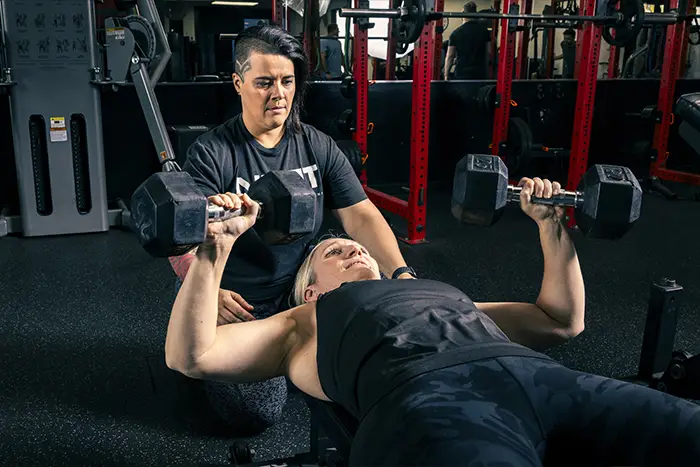
Strength training reduces this loss and helps preserve lean tissue.
At NLPT, this is the first focus for clients using GLP-1 medications.
2. What is the best exercise while on semaglutide?
Resistance training is the most effective. Studies show that strength training helps maintain muscle during calorie restriction and improves fat loss outcomes.
Cardio alone does not protect muscle. A structured strength program with a personal trainer leads to better body composition.
3. Can you build muscle while on GLP-1 medications?
It is possible but more difficult. Lower calorie intake reduces the body’s ability to build new tissue. Strength training combined with adequate protein intake improves the outcome. Clients who train consistently still improve strength and maintain muscle.
4. What are peptides, and do they help with fat loss?
Peptides are short chains of amino acids that signal specific functions in the body. Common fat loss peptides include CJC-1295 and Ipamorelin. Some research shows they may support growth hormone release. They are not a replacement for training. Without strength training, body composition improvements are limited.
5. Do peptides help with muscle growth?
Some peptides support recovery and growth hormone signaling. Data is still limited compared to strength training research. Resistance training remains the primary driver of muscle growth. Peptides may support the process but do not replace training.
6. Why do people feel weak on GLP-1 medications?
Lower calorie intake reduces energy availability. Muscle loss also contributes to reduced strength. Strength training helps maintain strength levels and improves energy output. Clients who train report better daily function and energy.
7. How much protein is needed on GLP-1 medications?
Research suggests 0.7 to 1.0 grams per pound of body weight helps preserve lean mass. Higher protein intake combined with strength training improves outcomes. This is a key focus in our coaching process.
8. Can GLP-1 medications slow metabolism?
Indirectly yes. Muscle loss leads to reduced metabolic rate. Strength training helps maintain muscle and supports metabolism. This is one of the most important reasons to train during weight loss.
9. What is the biggest mistake women make with GLP-1?
Relying only on the medication. Without strength training, results are incomplete. Body composition, strength, and long term success suffer.
10. What is the best long-term strategy?
Combine: GLP-1 or medical support if needed
Structured strength training
High protein nutrition
Consistency
At NLPT, we guide women through this exact process. Clients do not just lose weight. They build strength, improve energy, and maintain results.
If you are exploring GLP-1 medications or peptides, the missing piece is strength training.
Book a complimentary personal training session and learn how to build a plan that protects your muscle and improves your results.