Training hard is only part of building muscle. The other part happens in the kitchen, in your sleep, and in how well you support your body between sessions.
Supplements are not magic. They will not replace solid training or consistent nutrition. But when those two things are already in place, the right supplements can genuinely accelerate your results, improve recovery, and help you get more out of every session.
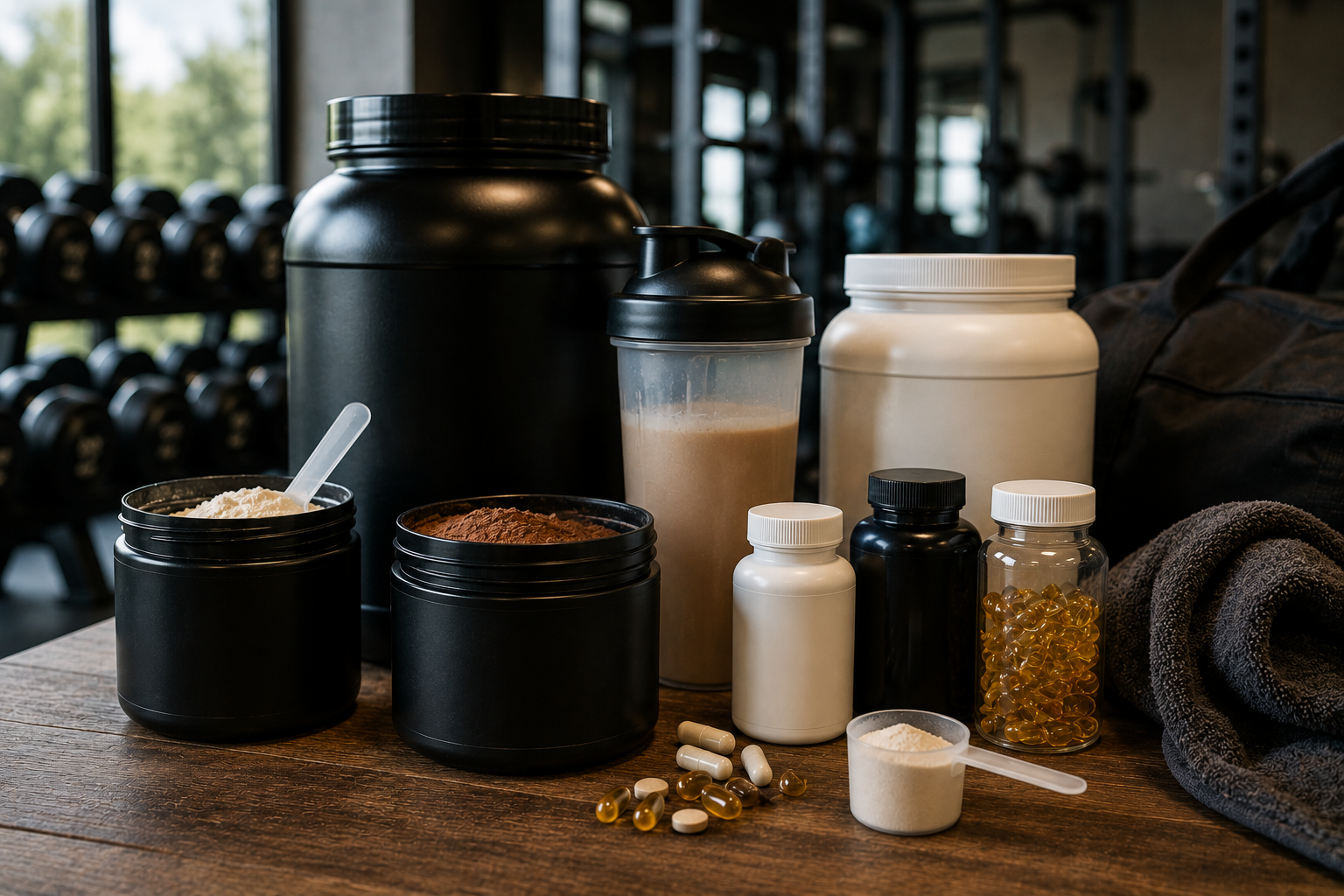
At No Limit Personal Training in Placentia, we work with adults across Orange, Anaheim Hills, Villa Park, and Yorba Linda who want to build real muscle without wasting money on products that do not deliver. Here is an honest breakdown of the supplements that have the strongest research behind them. Start personal training at NLPT and let our coaches help you pair the right training with the right recovery tools.
The Ground Rules Before We Get Into Supplements
Before listing anything, two points need to be made clearly.
First, no supplement works without consistent training and adequate nutrition. Protein powder does not build muscle if you are not lifting weights. Creatine does not help if your protein intake is insufficient. Supplements support a solid foundation. They do not replace one.
Second, hydration is the most underrated performance tool available and it is not technically a supplement. Your muscles are composed of roughly 75 percent water. Without adequate hydration your muscles cannot contract properly, nutrients cannot be transported efficiently, and recovery is significantly impaired. Drink enough water every single day before worrying about anything else on this list.
For a complete overview read our post on essential supplements for performance and recovery which covers the full picture in detail.
The Best Muscle Building Supplements
1. Whey Protein
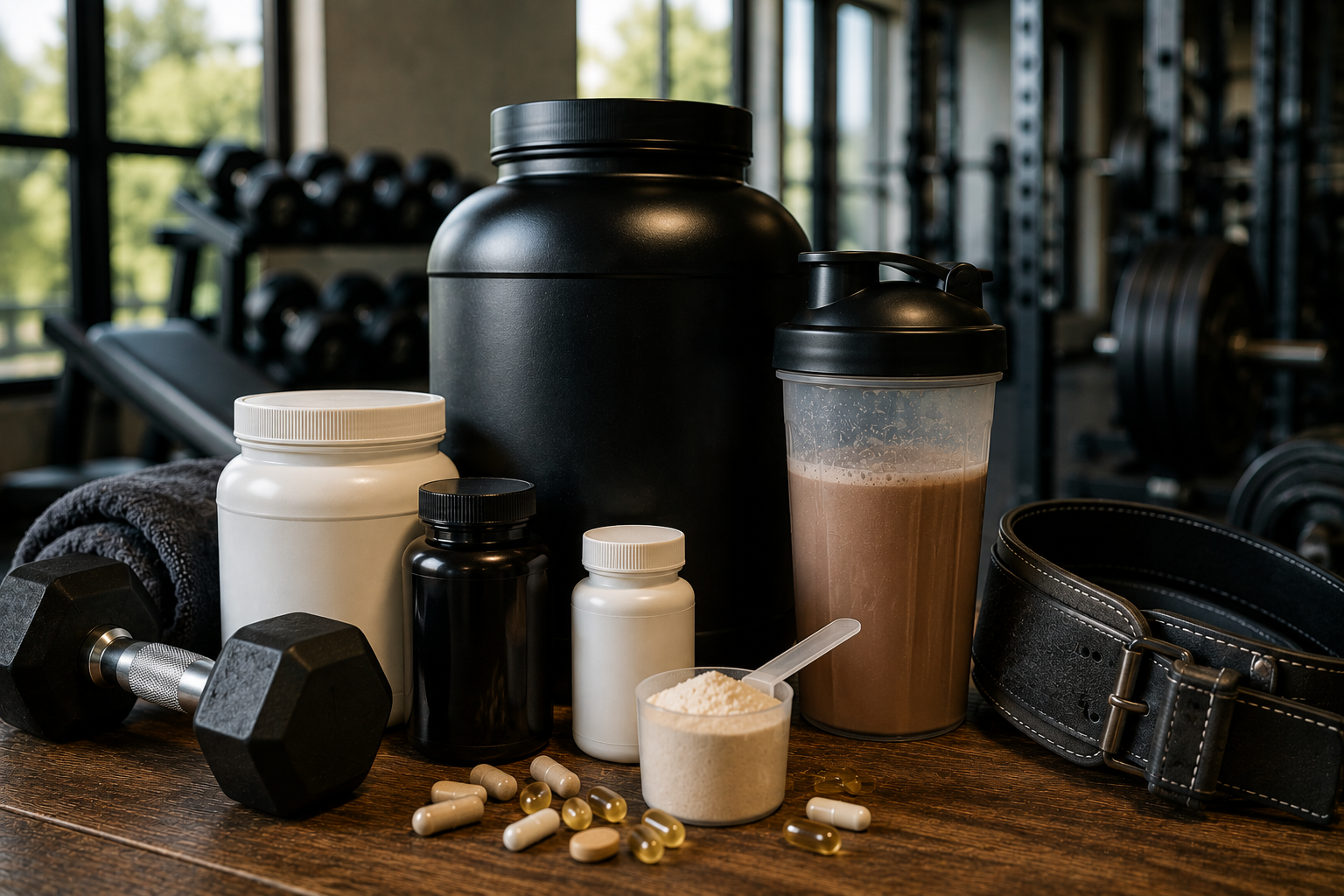
Protein is the raw material your body uses to repair and build muscle tissue after every training session. If you are not getting enough from whole food sources, a quality whey protein supplement is the most practical and well-researched way to close the gap.
Whey protein is derived from dairy and is particularly effective for muscle building because it is rich in leucine, the amino acid most responsible for triggering muscle protein synthesis. It also digests quickly, making it ideal for post-workout consumption when your muscles are most receptive to protein.
Research consistently supports that adults who strength train need between 1.4 and 2.2 grams of protein per kilogram of bodyweight per day. For most adults that means 95 to 130 grams daily. If hitting that number from food alone is difficult on busy days, a whey protein shake with 25 to 30 grams per serving is a reliable and convenient solution.
When choosing a whey protein look for third-party tested products with minimal additives and a short ingredient list. Grass-fed whey isolate is generally the cleanest option with the highest protein content per serving.
2. Creatine Monohydrate
Creatine is the most researched supplement in sports nutrition and one of the very few that consistently delivers on its claims. It works by increasing the availability of phosphocreatine in your muscles, which is the fuel source for short bursts of high-intensity effort like lifting heavy weights.
More phosphocreatine means more ATP can be regenerated during rest between sets, which translates to better performance, more reps at a given weight, and greater training volume over time. More training volume over time means more muscle.
Research also shows that creatine supports muscle cell hydration, reduces exercise-induced muscle damage, and may improve recovery between sessions. It is safe, inexpensive, and effective for adults of all ages and both sexes.
A standard dose is three to five grams per day taken consistently. Loading phases are optional and not necessary for most adults. Read our post on everything you need to know about creatine for a complete breakdown. Women specifically should also read our post on creatine for women which covers benefits beyond muscle building including brain health and overall wellbeing.
3. Omega-3 Fatty Acids
Omega-3s from fish oil are not typically marketed as muscle-building supplements but the research supporting their role in muscle recovery and growth is genuinely compelling.
Omega-3 fatty acids, specifically EPA and DHA, reduce chronic inflammation that accumulates from consistent heavy training. Less inflammation means faster recovery between sessions and less muscle soreness. Research has also found that omega-3 supplementation can increase the rate of muscle protein synthesis in older adults, making it particularly valuable for anyone training over 40.
The powerful benefits of omega 3 supplements go well beyond muscle building, including cardiovascular health, brain function, and joint health. Two to three grams of combined EPA and DHA per day from a quality fish oil supplement is the most commonly recommended dose in the research.
4. ZMA
ZMA is a combination of zinc, magnesium, and vitamin B6. It is one of the more underrated supplements for adults who train, particularly those who train at higher intensities.
Zinc plays a critical role in testosterone production and immune function. Magnesium is involved in over 300 enzymatic reactions including energy production, muscle contraction, and sleep quality. Vitamin B6 supports protein metabolism and hormone regulation.
Research has shown that ZMA supplementation can help maintain healthy testosterone levels in athletes, improve sleep quality, and support recovery. Many adults who train regularly are low in both zinc and magnesium due to losses through sweat, making supplementation particularly relevant.
ZMA is typically taken before bed on an empty stomach, which also aligns well with its sleep quality benefits.
5. A Quality Multivitamin
Vitamins and minerals are essential cofactors in virtually every process that supports muscle building. Vitamin D supports muscle function and testosterone production. B vitamins drive energy metabolism. Calcium, magnesium, and phosphorus support bone density and muscle contraction.
Adults who train regularly have higher micronutrient demands than sedentary adults. A quality multivitamin helps ensure you are not running a deficiency in something that quietly limits your results even when training and nutrition are otherwise dialed in.
6. Greens Powder
Greens powders are not a replacement for vegetables but they are a practical way to increase micronutrient density and support gut health on days when your vegetable intake falls short. They typically contain a blend of vegetables, grasses, adaptogens, and digestive enzymes that support overall health and recovery.
For adults who struggle to consistently eat enough vegetables or who want an additional micronutrient buffer alongside training, a quality greens powder is a worthwhile addition. Read our post on the benefits of greens powders for a detailed breakdown of what to look for and what the research actually supports.
What to Prioritize and in What Order
If you are starting from scratch with supplements here is the order we recommend based on research impact per dollar spent.
Start with adequate protein from food. If you cannot consistently hit your daily protein target from whole food sources, add a quality whey protein supplement. This single addition produces the most direct muscle-building benefit of anything on this list.
Add creatine next. Three to five grams per day taken consistently produces measurable improvements in strength and muscle over time with minimal cost and excellent safety data.
Omega-3s are worth adding if you are training hard and want to support recovery and reduce inflammation. ZMA is a good choice if sleep quality or recovery is a concern. A multivitamin works well as everyday insurance against micronutrient gaps. Greens powder fills in on days when your vegetable intake falls short.
Above all, do not spend money on supplements before training and nutrition are consistent. A solid training program with a coach and adequate whole food protein will produce better results than any supplement stack built on an inconsistent foundation.
Who This Is For
This post is for adults who train consistently and want to understand which supplements are actually worth taking and why. It is for people who want honest guidance rather than marketing claims.
It may be for you if you:
- Train regularly but are not sure which supplements are worth your money
- Want to support muscle building and recovery with evidence-backed tools
- Are tired of conflicting supplement advice and want a straightforward answer
- Live near Orange, Placentia, Anaheim Hills, Villa Park, or Yorba Linda
- Want coaching that covers training and nutrition together as one system
What to Do Next
The best muscle building supplement stack in the world will not outperform consistent training and solid nutrition. Get those two things right first and then let supplements do their job of supporting the work you are already putting in.
You can reach us at (714) 909-1203 or email info@nolimitpt.com. We are at 980 S Via Rodeo, Placentia CA, just minutes from Orange, Anaheim Hills, and Yorba Linda.
Train hard. Fuel smart. Recover well.
Frequently Asked Questions
What are the best supplements for building muscle?
The supplements with the strongest research support for muscle building are whey protein, creatine monohydrate, and omega-3 fatty acids. ZMA and a quality multivitamin support recovery, hormone health, and sleep. None of them replace consistent training and adequate nutrition.
Does creatine actually work for muscle building?
Yes. Creatine monohydrate is one of the most researched supplements in sports nutrition and consistently shows improvements in strength, training volume, and muscle mass over time. Three to five grams per day taken consistently is the standard evidence-backed dose.
Is protein powder necessary if I eat a lot of protein from food?
Not necessarily. If you can consistently hit 1.4 to 2.2 grams of protein per kilogram of bodyweight per day from whole food sources, protein powder is optional. It is most useful as a convenient way to close the gap on days when whole food protein intake falls short.
Are supplements safe for adults over 40?
The supplements on this list, whey protein, creatine, omega-3s, ZMA, and a multivitamin, are well-researched and generally safe for healthy adults at any age. Always check with your doctor before starting any new supplement, particularly if you take medications or have existing health conditions.
How does NLPT approach supplements for members?
At NLPT we recommend starting with training and nutrition fundamentals before adding supplements. We partner with Momentous for third-party tested products and our coaches can help members identify which supplements make sense for their specific goals and training program.