
Belly fat is one of the most common complaints we hear at No Limit Personal Training. Not just from people who are significantly overweight, but from adults who are otherwise active and eat reasonably well, yet still carry stubborn fat around the midsection that will not budge no matter what they try.
The frustrating truth is that belly fat is not just about eating less and moving more. After 35 hormones shift, stress builds up, sleep gets shorter, and the body starts storing fat differently than it used to. The gut becomes the default storage location and losing it requires a smarter approach than just cutting calories.
These 11 tips are backed by research and built around what actually works for real, busy adults in Placentia, Orange, Anaheim Hills, and across Orange County. Claim your free week at No Limit Personal Training and let our coaches help you put all of these into practice together.
1. Strength Train at Least Three Times Per Week
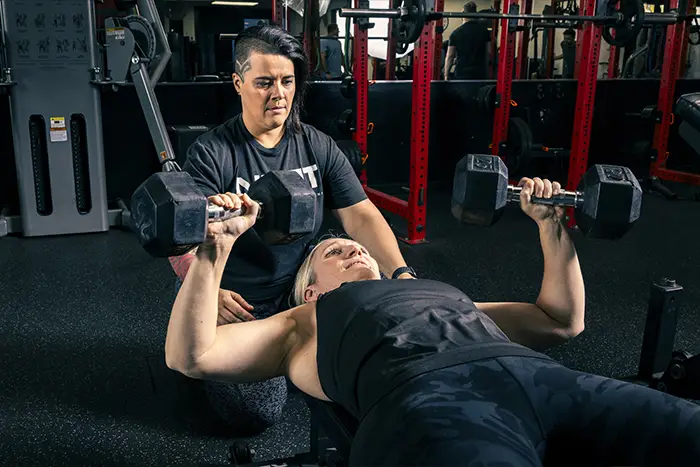
If you want to lose that gut, strength training is the most important thing you can do. Not cardio. Not ab exercises. Lifting weights.
Here is why. Your body burns fat based on its metabolic rate, which is largely determined by how much muscle you carry. Every pound of muscle burns calories around the clock, even while you are sitting, sleeping, and going about your day. When you lift weights consistently, you build muscle and raise your resting metabolic rate so your body burns more fat all day long.
Research consistently shows that combining strength training with a modest calorie deficit produces greater reductions in visceral belly fat, the dangerous deep fat around your organs, than cardio alone. Compound movements like squats, deadlifts, rows, and presses recruit the most muscle, burn the most calories, and produce the biggest metabolic shift.
Two to four sessions per week of 30 to 60 minutes each is the sweet spot for most adults. You do not need to spend hours in the gym. You need to show up consistently and lift with purpose.
2. Add High Intensity Cardio Two to Three Times Per Week
Cardio has its place, but the type and duration matter more than most people realize.
High intensity interval training, or HIIT, alternates short bursts of hard effort with brief recovery periods. Research published in multiple journals shows that HIIT is more effective at reducing abdominal fat than steady-state cardio performed for the same duration. A 2021 systematic review confirmed that HIIT produced significant reductions in total body fat and abdominal fat across multiple age groups.
The practical advantage is time. A well-designed HIIT session of 15 to 25 minutes produces comparable or better fat-loss results than 45 minutes of moderate-pace cardio. For busy adults who cannot afford to spend an hour on a treadmill, this matters enormously.
You can explore HIIT group training in Yorba Linda at NLPT if you want a coached, structured option that takes the guesswork out of this entirely.
3. Cut Back on Alcohol
This one is uncomfortable but the research is clear. Alcohol is one of the most underappreciated drivers of stubborn belly fat, and reducing it is often the fastest visible change people see.
When you drink, your liver prioritizes burning alcohol above everything else. Fat burning stops. The calories from food you eat alongside drinks go directly into storage, with the midsection as the preferred destination. Alcohol also raises cortisol, disrupts sleep, lowers testosterone in men, and increases appetite the next day.
Harvard Health summarizes it straightforwardly: alcohol packs calories and those calories tend to land in the belly. A review on alcohol and central obesity found that moderate to heavy drinking significantly raises the risk of abdominal fat accumulation, independent of total calorie intake.
You do not have to stop entirely. But if losing that gut is the goal, cutting back to three to four drinks per week and avoiding alcohol close to bedtime will produce noticeable results within three to four weeks for most people.
4. Prioritize Lean Protein at Every Meal
Protein is the single most powerful nutritional lever for losing belly fat. It keeps you full longer, burns more calories during digestion than any other macronutrient, and protects your muscle while your body loses fat.
Research published in PMC found that adults who ate higher protein diets while in a calorie deficit lost significantly more visceral fat than those who ate the same calories with less protein. A randomized controlled trial in Scientific Reports showed that protein supplementation during an energy-restricted diet specifically induced visceral fat loss alongside favorable gut health changes.
The best lean protein sources include eggs, chicken breast, fish, Greek yogurt, cottage cheese, lean beef, and a quality protein powder when whole food sources are not convenient. Aim for 25 to 40 grams of protein per meal spread across three to four meals per day. This single habit alone tends to reduce overall calorie intake naturally because protein keeps hunger in check for hours after eating.
5. Choose Complex Carbohydrates Over Refined Ones
Carbohydrates are not the enemy. The type of carbohydrate matters enormously.
A landmark study from the Framingham Heart Study followed thousands of adults and found that higher whole grain intake was consistently associated with less visceral belly fat, while higher refined grain intake was associated with more visceral fat, even when total calories were the same. Refined carbs like white bread, sugary cereals, crackers, and pastries spike blood sugar quickly, trigger insulin surges, and train the body to store fat in the belly.
Complex carbohydrates from oatmeal, legumes, fruit, vegetables, sweet potatoes, and whole grains digest slowly, stabilize blood sugar, and come loaded with fiber that research shows directly reduces visceral fat accumulation. A Wake Forest study found that every 10 additional grams of soluble fiber per day was linked to a 3.7 percent reduction in visceral fat over five years.
A simple rule is to make sure carbohydrates on your plate come with fiber and a protein source. If it comes in a wrapper and lists sugar as a top-three ingredient, it works against your gut-loss goal.
6. Use Healthy Fats, Not Low Fat Products
The decades-long war on dietary fat produced an explosion of low-fat and fat-free products loaded with sugar and refined carbs. Research has consistently shown that was the wrong direction.
Healthy fats from olive oil, avocado, nuts, seeds, and omega-3 rich sources like salmon and flaxseed are not just safe for fat loss. They actively support it. A clinical trial in Diabetes Care found that a monounsaturated fat-rich diet prevented central fat redistribution in insulin-resistant adults compared to a high-carb diet of identical calories. A canola oil intervention study reduced abdominal fat by 1.6 percent in just four weeks.
Omega-3 fatty acids from fatty fish, walnuts, chia seeds, and flaxseed reduce the chronic inflammation that drives visceral fat accumulation and insulin resistance. Multiple studies show that higher omega-3 intake is associated with lower abdominal fat, particularly in adults over 40.
Replace processed vegetable oils and fat-free products with olive oil, avocado, a handful of nuts, and fatty fish twice a week. The change in how you feel and look over six to eight weeks is consistently noticeable.
7. Do Not Skip Breakfast
Skipping breakfast might seem like an easy way to cut calories, but the research suggests it often backfires.
Studies show that people who skip breakfast tend to eat more later in the day, make poorer food choices by mid-afternoon, and experience greater blood sugar swings that trigger cravings and overeating. Research on cell-level fat storage suggests that skipping the morning meal disrupts metabolic clocks in fat tissue in ways that increase fat storage, particularly in the abdominal area.
The key is what you eat at breakfast, not just whether you eat. A breakfast built around protein and fiber stabilizes blood sugar, reduces afternoon cravings, and gets you close to halfway to your daily protein target before the workday begins.
Two to three eggs with Greek yogurt and berries, or a protein smoothie with whole milk, protein powder, and fruit, takes five minutes and sets up your metabolism for the next six hours. A bagel and orange juice does the opposite.
8. Get a Good Night of Sleep
If you are doing everything else right and still cannot lose that gut, sleep deprivation may be the hidden reason.
A Mayo Clinic randomized controlled trial published in the Journal of the American College of Cardiology put healthy adults through two weeks of sleep restriction at four hours per night. The sleep-restricted group gained 11 percent more visceral fat specifically compared to those sleeping nine hours. Critically, three nights of catch-up sleep afterward did not reverse the visceral fat gained.
Poor sleep raises cortisol, the stress hormone that preferentially stores fat in the belly. It disrupts hunger hormones, causing people to eat around 300 more calories per day on average. And it impairs the deep sleep stages where growth hormone is released, which is when most overnight muscle repair and fat metabolism occur.
Seven to nine hours of sleep per night on a consistent schedule is not a luxury. For anyone trying to lose that gut, it is a core part of the strategy.
9. Drink More Water Every Day
Most adults are mildly dehydrated most of the time and have no idea it is stalling their fat loss.
A 2016 review in Frontiers in Nutrition found that increased hydration is associated with weight loss through two mechanisms: reduced food intake and increased lipolysis, which is the technical term for fat breakdown. Drinking 16 ounces of water raises your metabolic rate by approximately 24 to 30 percent for up to an hour. Research from Johns Hopkins found that replacing one daily caloric beverage with water was consistently linked to lower total calorie intake and weight reduction over time.
Dehydration also directly raises cortisol, which as we covered, is one of the primary drivers of belly fat accumulation. Research published in the International Journal of Sports Medicine confirmed that even mild dehydration elevates cortisol levels during exercise.
A practical starting target is to drink half your body weight in ounces of water per day. A 180-pound adult would aim for around 90 ounces daily. Drink 16 ounces before each meal, carry a water bottle through your day, and you will hit your target without thinking about it.
10. Support Your Nutrition With a Quality Multivitamin
Nutrient deficiencies are more common than most people realize and several of them directly affect your ability to lose belly fat.
Low vitamin D is strongly linked to higher visceral fat accumulation and insulin resistance. Magnesium deficiency disrupts sleep quality, raises cortisol, and impairs the enzymatic processes that regulate fat metabolism. B vitamins are essential for converting food into usable energy and supporting thyroid function, which governs metabolic rate.
A quality multivitamin does not replace real food and it will not melt fat on its own. But for busy adults who cannot always eat perfectly, it closes the gaps that otherwise quietly work against your fat-loss progress. Look for third-party tested products with methylated B vitamins and at least 1000 IU of vitamin D.
For more on what most people get wrong about fat loss, including which supplements genuinely help versus which ones are just marketing, that post breaks it down honestly.
11. Train With Coaches Who Know What They Are Doing
The most important tip on this list is not a food or a supplement. It is accountability and structure.
Most adults who struggle to lose that gut are not lacking willpower. They are lacking a clear plan, consistent guidance, and someone who notices when they show up and when they do not. Research on behavior change consistently shows that accountability is one of the strongest predictors of long-term fat loss success.
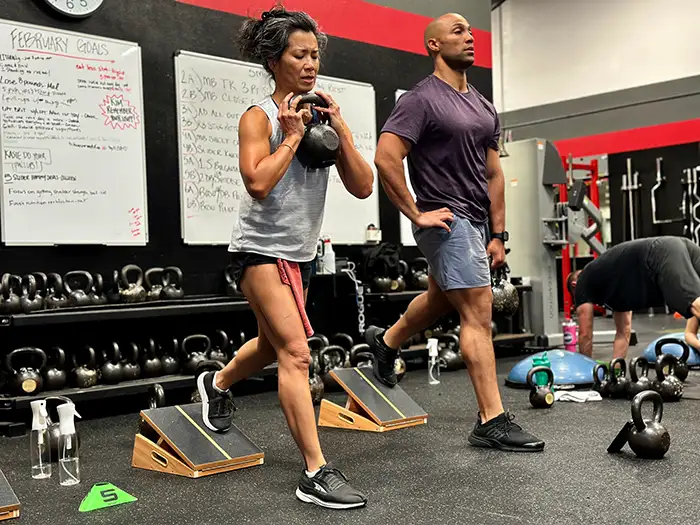
At No Limit Personal Training, every session is coach-led. Every program is built around your specific goals. Every member gets the structure and support that makes all ten of the other tips above far easier to follow consistently.
If you want to understand steps to achieve sustainable fat loss beyond just these tips, that post walks through the full process in detail. And if you want to see what coached group training looks like in person, our group fitness classes in Placentia are a great starting point.
Who This Is For

This post is for adults who are frustrated with stubborn belly fat and want honest, practical tips that actually work. It is for people who have tried cutting calories or doing more cardio and are not seeing the gut changes they want.
It may be for you if you:
- Carry stubborn belly fat that does not respond to your current routine
- Want to understand what research says about losing that gut specifically
- Are ready to change your habits with the right guidance and accountability
- Live near Placentia, Orange, Anaheim Hills, Villa Park, or anywhere in Orange County
What to Do Next
Losing that gut is not about finding one magic tip. It is about stacking the right habits consistently until your body has no choice but to change. All 11 of the tips above work together. Start with the two or three that feel most actionable right now and build from there.
Claim your free week at No Limit Personal Training today. You can also call us at (714) 909-1203 or email info@nolimitpt.com. We are at 980 S Via Rodeo, Placentia CA.
The gut did not appear overnight and it will not disappear overnight either. But with the right plan it does go away.
Frequently Asked Questions
What are the most effective tips to lose that gut?
The most effective combination is consistent strength training, adequate protein at every meal, quality sleep, reduced alcohol intake, and staying hydrated. These five habits address the root causes of belly fat accumulation and work together to produce lasting results.
How long does it take to lose belly fat with these tips?
Most people notice changes in energy and how their clothes fit within three to six weeks of applying these habits consistently. Measurable reductions in waist circumference and visible belly fat changes typically show within eight to twelve weeks. Visceral fat, the deeper dangerous fat, can drop meaningfully in as little as eight weeks with the right training and nutrition.
Does strength training really reduce belly fat better than cardio?
Research consistently shows that strength training combined with moderate cardio produces greater reductions in visceral belly fat than cardio alone. Building muscle raises resting metabolic rate so your body burns more fat all day, not just during the workout.
Why does alcohol cause belly fat?
When you drink alcohol, your liver prioritizes burning it over burning fat. Fat oxidation stops and calories from food eaten alongside drinks go into storage, with the belly as the preferred location. Alcohol also raises cortisol, disrupts sleep, and increases next-day appetite, all of which compound the belly fat problem.
Does skipping sleep really cause belly fat?
Yes. A Mayo Clinic randomized trial found that sleep-restricted adults gained 11 percent more visceral fat specifically compared to those sleeping nine hours per night, even eating the same foods. Poor sleep raises cortisol, disrupts hunger hormones, and stops overnight fat metabolism, all of which drive belly fat accumulation.