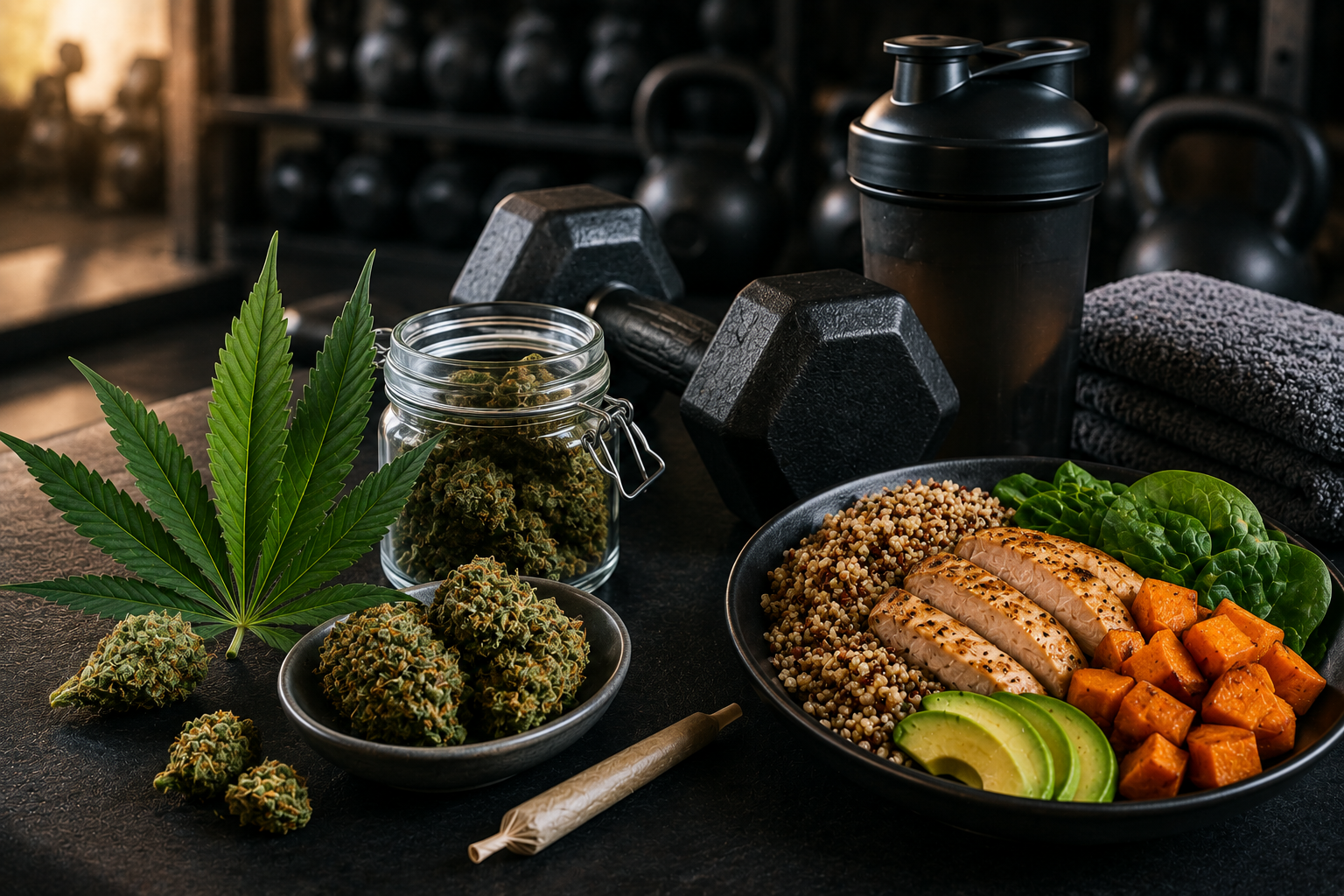
As cannabis becomes more widely used and accepted across California and the rest of the country, more people who train regularly are asking a simple question. Does marijuana actually affect your workout? Does it help, hurt, or make no difference?
The honest answer is that it depends on what you are asking. The research on cannabis and exercise is more nuanced than most people expect, and the answer looks different depending on whether you are talking about workout performance, recovery, or weight management.
At No Limit Personal Training in Placentia, we believe in giving our members honest, straightforward information so they can make good decisions for their health. Book your complimentary session and let our coaches help you build a plan that actually works.
Here is what the current research actually says.
What the Research Says About Cannabis and Exercise Performance
The most straightforward area of research is performance during exercise. Multiple studies and systematic reviews have looked at what happens when people train under the acute influence of THC, the primary psychoactive compound in cannabis.
A 2020 systematic review and umbrella review published in PubMed concluded that cannabis consumption has what researchers call an ergolytic effect on exercise performance, meaning it decreases rather than enhances it. The primary reasons include impaired reaction time, reduced coordination, increased heart rate, and reduced ability to sustain high-intensity effort.
A separate 2024 study published in the International Journal of Environmental Research and Public Health looked at chronic cannabis users versus non-users and found no significant difference in key performance markers like VO2 max and physical work capacity between the two groups. Chronic use appears to be different from acute use in terms of its performance impact.
The takeaway from the performance research is fairly consistent. Using cannabis immediately before training is likely to hurt your workout, not help it. Chronic use over time does not appear to significantly impair athletic capacity, but it does not enhance it either.
Cannabis, Recovery, and CBD
This is where the research gets more interesting and more mixed.
A 2023 study published in the Journal of Cannabis Research surveyed trained individuals who used cannabis as a recovery tool. The majority reported that they felt cannabis, including both THC and CBD, helped them recover from both aerobic and resistance exercise. The researchers noted that CBD and THC have potential analgesic and anti-inflammatory properties that may support recovery, particularly through their effects on sleep quality and pain reduction.
CBD specifically has been removed from the World Anti-Doping Agency’s banned list since 2018, reflecting growing acceptance of its potential recovery benefits. Research suggests CBD may support sleep quality, reduce anxiety, and dampen inflammation, all of which matter for recovery between training sessions.
However the researchers were careful to note that more controlled data is needed before any firm conclusions can be drawn. What people report feeling and what is measurably happening physiologically do not always align, and the research in this area is still developing.
How Cannabis Affects Weight and Metabolism
This is the most complex part of the cannabis and fitness conversation, and one where the research is genuinely surprising to most people.
The popular assumption is that cannabis causes weight gain because of the well-known appetite-stimulating effect, often called the munchies. THC does increase appetite and food cravings in the short term. A research study showed that men who used cannabis consumed significantly more snack calories on days they used it compared to days they did not, which contributed to meaningful short-term weight gain.
The Paradox: What Population Studies Actually Show
But here is the paradox that researchers have been trying to explain for years. Population studies consistently show that regular cannabis users tend to have lower BMI and lower rates of obesity and type 2 diabetes compared to non-users, despite the appetite-stimulating effects.
A 30-year prospective study published in the European Journal of Internal Medicine found that current cannabis use was associated with lower BMI across the study population. A 2025 review published in Current Obesity Reports concluded that most studies suggest cannabis use is not associated with weight gain and may even facilitate weight loss in some contexts, despite its association with increased appetite and less physical activity.
A recent study from UC Riverside published in the Journal of Physiology found that specific compounds in cannabis may play a role in regulating metabolism and improving communication between fat tissue and the pancreas, which is relevant to insulin regulation and metabolic health.
The current thinking is that the acute effects of THC on appetite and the longer-term effects on metabolism appear to work in somewhat opposite directions, and that the overall picture is far more complex than a simple munchies equals weight gain equation.
What is clear is that cannabis is not a reliable weight loss tool, and that the short-term calorie increase from increased appetite is real. Understanding how to lose fat and build muscle still comes down to the fundamentals of training, nutrition, and consistency regardless of cannabis use.
What This Means If You Train Regularly
If you use cannabis recreationally and also train consistently, here is the practical summary of what the research suggests.
Using cannabis immediately before training is likely to reduce your performance. Reaction time, coordination, and the ability to push through high-intensity effort are all affected acutely by THC. If you want to get the most out of your session, training without THC beforehand is the better choice.
Using cannabis after training or for recovery is an area where some evidence suggests potential benefit, particularly around sleep quality and soreness management. CBD specifically has a growing body of support in this area. But the research is not definitive and individual responses vary significantly.
From a weight perspective, the short-term appetite increase from THC is real and worth being aware of if fat loss is your goal. The easiest way to manage this is to be intentional about what is available to eat in those windows, focusing on whole foods rather than processed snacks. Understanding eating healthier as an adult becomes even more important when appetite stimulation is a factor.
The longer-term metabolic picture is genuinely complex and still being studied. What remains true regardless of cannabis use is that consistent training, adequate protein, quality sleep, and managed stress are the foundation of any real fitness result.
What NLPT Focuses On
At No Limit Personal Training, we do not tell our members what to do outside the gym. What we do is help them build the training habits, nutrition awareness, and consistency that produce lasting results regardless of their lifestyle choices.
Our group fitness classes in Placentia are coached, structured, and built around helping real adults make real progress. The approach works because it removes the guesswork and gives you a plan you can follow consistently over time.
That consistency is what matters most, and it is what produces results that no supplement, substance, or shortcut can replace.
Who This Is For
This post is for adults who use cannabis recreationally and want honest information about how it may affect their training and weight management goals. It is for people who are tired of vague or moralizing answers and want to know what the actual research says.
It may be for you if you:
- Use cannabis recreationally and also train regularly
- Want to know if cannabis is helping or hurting your recovery
- Are working on fat loss and want to understand how appetite changes factor in
- Want straightforward information without judgment
- Train in or around Placentia, Orange, Anaheim Hills, or Villa Park
What to Do Next
The research on cannabis and exercise is evolving and more nuanced than most headlines suggest. What is clear is that using it immediately before training is likely to hurt your performance, that its effects on weight are more complex than the munchies narrative suggests, and that the fundamentals of training and nutrition still matter most regardless of any other factor.
Book your complimentary personal training session at No Limit Personal Training today. You can also call us at (714) 909-1203 or email info@nolimitpt.com. We are at 980 S Via Rodeo, Placentia CA.
Show up. Train consistently. Eat well. Everything else is secondary.
Frequently Asked Questions
Does marijuana hurt your workout performance?
Research suggests that using cannabis acutely before training, meaning within a few hours of your session, is likely to reduce performance through impaired reaction time, coordination, and sustained effort capacity. Chronic use over time does not appear to significantly impair overall athletic capacity based on current evidence.
Can marijuana help with exercise recovery?
Some research suggests that CBD and THC may support recovery through analgesic, anti-inflammatory, and sleep-quality effects. A 2023 survey study found that trained individuals who used cannabis for recovery reported feeling it helped them. However the research is still developing and more controlled studies are needed.
Does marijuana cause weight gain?
Short term, THC increases appetite and can lead to higher calorie intake. However population studies consistently show that regular cannabis users tend to have lower BMI than non-users, which researchers describe as a paradox still being studied. Cannabis should not be considered a weight loss tool, but the simple munchies equals weight gain equation does not fully reflect what the research shows.
Is CBD different from THC for training purposes?
Yes. CBD is non-psychoactive and has been removed from the World Anti-Doping Agency’s banned list. Research suggests it may support recovery through reduced inflammation, improved sleep, and anxiety reduction without the performance-impairing effects associated with THC.
Does NLPT have a stance on cannabis use?
NLPT focuses on helping members build consistent training and nutrition habits that produce results. We provide honest, research-backed information and leave lifestyle choices to our members. What we focus on is helping you train well, recover properly, and stay consistent over time.